Asking an AI application to find suppliers and prepare an auction draft does not mean it can access the company's systems. Generating an answer and reading or changing records in a business application are different capabilities. Model Context Protocol, or MCP, helps explain that connection.
What does MCP standardise?
The official MCP architecture describes communication between AI applications, tools and data sources. Model Context Protocol — Architecture Overview In procurement, think of it as a structured way to make permitted operations available to an AI application. The available tools and the information required for an operation are part of that connection.
MCP is not an AI model and does not replace an ERP or procurement platform. A connection also does not mean every AI application supports the same capabilities in every version or subscription. Verify compatibility with the environment the organisation actually intends to use.
How does it relate to APIs?
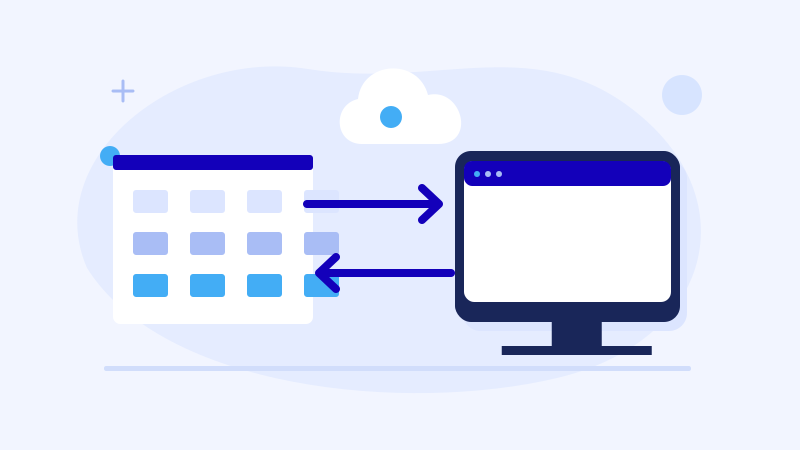
An API defines operations a software service exposes to other software. MCP may sit in a connection layer that makes those operations usable by an AI application. This does not automatically require rewriting all existing integrations; the appropriate architecture depends on the systems involved.
For example, an AI environment might retrieve valid units before matching values from a spreadsheet. If the match remains uncertain, it should ask the user. Access to a tool does not by itself establish that a commercial operation performed through that tool is correct. Data checks remain necessary.
Why do permission boundaries matter?
The official MCP authorisation guide addresses permission-controlled access to protected resources. Model Context Protocol — Understanding Authorization The organisation should understand which account is connected, what data can be accessed and how the connection can be revoked. Technical setup and business authority are separate decisions.
Use a limited dataset and a clearly defined draft scenario for the first trial. Do not permit consequential operations such as publication simply because the connection works. Review the user's underlying permissions together with those granted to the AI connection.
Tenflex's approach
Tenflex AI Connect is based on working through a compatible AI environment without requiring a particular model. Tasks such as preparing spreadsheet items and creating auction drafts can use that connection. The user's Tenflex permissions remain the boundary; use is optional and access can be terminated.
During evaluation, ask three questions before focusing on model names: which operations are available, which data reaches the external service and where is user review required? These questions connect the protocol to daily work more directly than its technical label alone. They also help separate a useful integration from an impressive demonstration whose operating rules remain unclear.